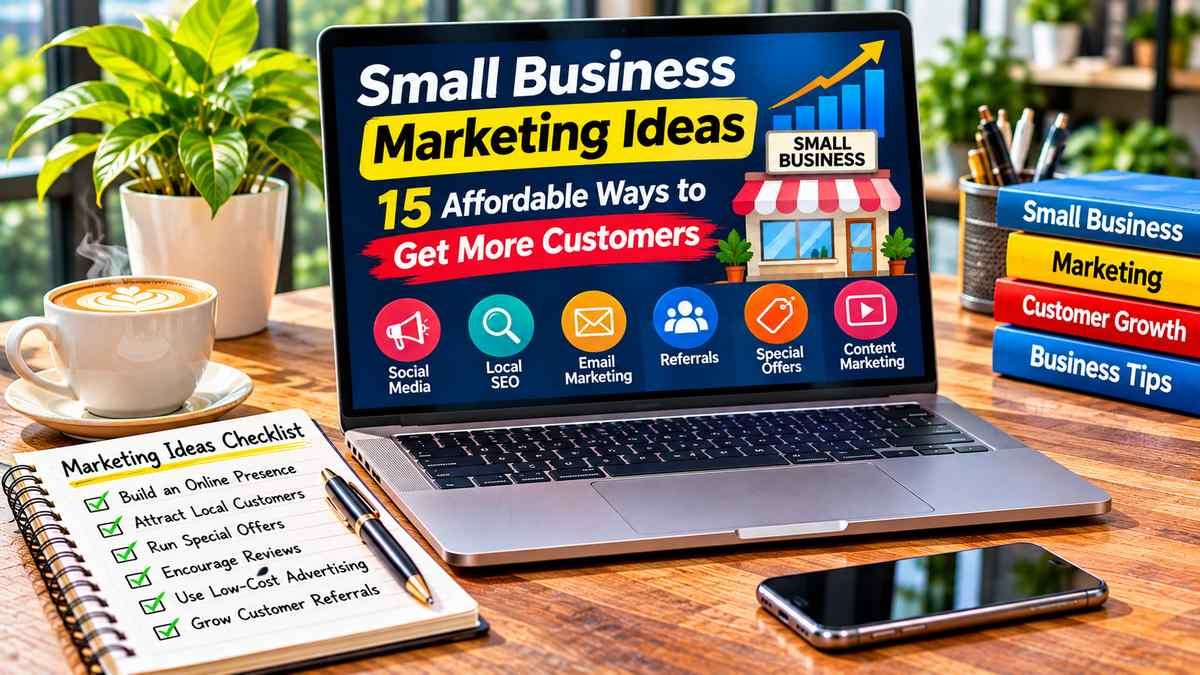
Marketing is one of the most important parts of building a successful small business. Whether you run an online store, a local shop, a service-based company, or a startup, attracting customers is essential for increasing sales and growing your business.
However, marketing can be challenging when you have a limited budget. Hiring marketing agencies, running expensive advertising campaigns, and purchasing professional marketing software may not be realistic for every small business.
The good news is that you do not need a huge budget to promote your business effectively.
With the right small business marketing ideas, you can reach potential customers, build brand awareness, increase website traffic, and generate more sales without spending too much money.
In this guide, you will discover 15 affordable marketing strategies that small business owners can use in 2026 to attract customers, strengthen their online presence, and grow their businesses.
1. Understand Your Target Audience

Before investing money in marketing, you need to understand who your potential customers are.
Your target audience consists of the people most likely to purchase your products or services.
Understanding their needs helps you create marketing messages that connect with the right people.
Consider these questions:
- Who are your ideal customers?
- What problems do they want to solve?
- What products or services are they looking for?
- How much are they willing to spend?
- Which social media platforms do they use?
- What influences their purchasing decisions?
For example, if you operate a small clothing business, your target audience may include people interested in affordable fashion, everyday outfits, and seasonal clothing.
Once you understand your customers, you can focus your marketing efforts on the platforms and messages most likely to reach them.
Practical tip: Start by talking to existing customers, reviewing customer feedback, and researching what people are searching for in your industry.
2. Create a Professional Business Website

A website gives your business a professional online presence and allows potential customers to learn about your products and services.
Even if you operate a small business, having a website can help customers discover your brand, understand what you offer, and contact you.
Your website should include:
- A clear homepage.
- An About Us page.
- Products or services information.
- Contact information.
- Customer testimonials where available.
- Frequently asked questions.
- Clear calls to action.
You can use platforms such as WordPress, Wix, or Shopify to build a website.
Practical tip: Make sure your website works well on smartphones, loads efficiently, and makes it easy for visitors to contact your business or purchase your products.
3. Use Social Media Marketing

Social media is one of the most accessible ways for small businesses to connect with potential customers.
Platforms such as Facebook, Instagram, TikTok, LinkedIn, and Pinterest provide opportunities to introduce your business, share products, and communicate with your audience.
You can use social media to:
- Share product photographs.
- Publish educational content.
- Post customer testimonials with permission.
- Demonstrate how your products work.
- Announce new products.
- Answer customer questions.
- Share special promotions.
You do not need to be active on every platform. Choose the channels where your target customers spend the most time.
Practical tip: Develop a simple weekly posting schedule and prioritize helpful, attractive, and relevant content instead of publishing promotional messages constantly.
4. Improve Your Website’s SEO

Search Engine Optimization (SEO) helps your website become more visible in search engine results.
When people search for products or services related to your business, optimized website pages can help them discover your brand.
SEO is particularly useful for businesses that want to attract visitors without depending entirely on paid advertising.
Important SEO activities include:
- Researching relevant keywords.
- Writing useful website content.
- Creating descriptive page titles.
- Optimizing images with descriptive alt text.
- Improving website loading speed.
- Building relevant internal links.
- Publishing helpful blog articles.
- Ensuring your website is mobile-friendly.
For example, a small bakery in a particular city could create useful website content about its products, location, opening hours, and services.
Practical tip: Focus on keywords that describe what your business offers and what your potential customers are actually searching for.
5. Create a Google Business Profile

If you operate a business that serves customers at a physical location or travels to customers, a Google Business Profile can help people discover your business through Google Search and Maps.
It allows you to provide important business information, including:
- Business name.
- Address or service area.
- Phone number.
- Website.
- Opening hours.
- Business photographs.
- Products and services.
- Customer reviews.
A complete and accurate profile makes it easier for potential customers to find and contact your business.
Practical tip: Keep your business information updated, add genuine photographs, and respond professionally to customer reviews.
You can create or manage your profile through Google Business Profile. Eligibility depends on Google’s requirements for businesses that interact with customers in person.
6. Start Email Marketing

Email marketing allows small businesses to communicate directly with people who have agreed to receive their messages.
It can help you maintain customer relationships, share business updates, introduce new products, and promote relevant offers.
You can start by:
- Creating an email signup form.
- Offering a useful free resource or newsletter.
- Sending welcome emails to new subscribers.
- Sharing helpful information regularly.
- Introducing relevant products and services.
- Reviewing campaign performance.
Popular platforms include MailerLite, Brevo, and Mailchimp.
Practical tip: Focus on building a permission-based email list rather than purchasing email addresses. Send useful messages and always provide an easy unsubscribe option.
7. Use Content Marketing to Attract Customers

Content marketing involves creating and sharing useful information that attracts and educates potential customers.
Instead of relying only on advertisements, you can publish content that answers questions and helps people solve problems.
Examples include:
- Blog articles.
- How-to guides.
- Educational videos.
- Product demonstrations.
- Infographics.
- Frequently asked questions.
- Industry tips.
For example, a small skincare business could publish articles about skincare routines, ingredient information, and product selection.
Useful content helps people understand your expertise and discover your products naturally.
Practical tip: Choose topics that answer your customers’ most common questions and connect each article to relevant products or services.
15 Affordable Small Business Marketing Ideas
The following strategies can help you attract potential customers without requiring a large marketing budget.
8. Encourage Customer Reviews and Testimonials

Customer reviews can influence purchasing decisions because people often want to know about other customers’ experiences before buying.
Positive, genuine reviews can help your business build credibility and establish trust with potential customers.
You can encourage customers to leave reviews by:
- Sending a polite follow-up message after a purchase.
- Asking satisfied customers to share their experiences.
- Providing links to your review profiles.
- Responding professionally to feedback.
- Sharing genuine testimonials with permission.
Never purchase fake reviews or offer incentives in ways that violate platform policies.
Practical tip: Make requesting feedback a natural part of your customer service process.
9. Offer Discounts and Special Promotions

Special promotions can encourage potential customers to try your products or services.
You do not need to offer large discounts. Small, carefully planned promotions can create interest while protecting your profit margins.
Consider offering:
- First-time customer discounts.
- Seasonal promotions.
- Limited-time product offers.
- Bundle deals.
- Loyalty discounts.
- Free delivery above a minimum purchase.
For example, an online clothing store could offer a small discount on a customer’s first order.
Practical tip: Set clear promotion dates and calculate your costs before offering discounts.
10. Use Referral Marketing

Referral marketing encourages existing customers to recommend your business to friends, family members, and colleagues.
It is an affordable way to reach potential customers through personal recommendations.
You can develop a referral strategy by:
- Asking satisfied customers to recommend your business.
- Creating a simple referral program.
- Offering appropriate rewards where financially practical.
- Providing excellent customer service.
- Making it easy to share your website or business information.
For example, a service-based business could offer an appropriate discount to customers who successfully refer a new client, provided the arrangement complies with applicable rules.
Practical tip: Focus on delivering a positive customer experience. People are more likely to recommend businesses they trust.
11. Create Short Marketing Videos

Video content is a useful way to introduce products, explain services, and show potential customers what makes your business valuable.
You do not need expensive cameras or professional production equipment to get started.
A smartphone can be enough for creating simple videos.
Some content ideas include:
- Product demonstrations.
- Behind-the-scenes videos.
- Customer questions and answers.
- Tutorials.
- New product announcements.
- Business introductions.
- Customer success stories.
You can share videos on TikTok, Instagram Reels, Facebook, and YouTube Shorts.
Practical tip: Start with short videos that answer common customer questions or demonstrate how your products work.
12. Collaborate With Other Small Businesses

Working with other businesses can help you reach new audiences without paying for expensive advertising campaigns.
Look for businesses that serve similar customers but do not directly compete with your products or services.
For example:
- A bakery could collaborate with a local coffee shop.
- A clothing store could work with a fashion photographer.
- A fitness trainer could collaborate with a healthy food business.
- A website designer could partner with a digital marketing consultant.
Possible collaboration activities include joint promotions, social media posts, referral arrangements, and community events.
Practical tip: Choose partners whose audience and business values align with yours.
13. Use WhatsApp Business to Communicate With Customers

Messaging applications can make customer communication easier, particularly for small businesses that want to answer questions and manage inquiries quickly.
WhatsApp Business offers features designed to help businesses communicate with customers.
You can use it to:
- Create a business profile.
- Display product catalogs.
- Respond to customer inquiries.
- Send order updates.
- Set up greeting messages.
- Organize customer conversations with labels.
- Provide customer support.
Practical tip: Use messaging responsibly. Communicate with customers who expect your messages and avoid sending unwanted promotional messages.
Website: Visit WhatsApp Business.
14. Participate in Online Communities

Online communities provide opportunities to connect with people who share interests related to your industry.
You can participate in relevant Facebook groups, LinkedIn communities, forums, and professional networks.
For example, a small business selling website services could participate in communities where entrepreneurs discuss website development, online business, and digital marketing.
Effective ways to participate include:
- Answering questions.
- Sharing practical advice.
- Discussing industry developments.
- Helping people solve problems.
- Sharing relevant resources when permitted.
Avoid joining communities simply to publish advertisements.
Practical tip: Build relationships and establish credibility before promoting your products or services.
15. Use Affordable Paid Advertising

Although organic marketing can be valuable, paid advertising may help your business reach potential customers more quickly.
You do not need to spend a large amount of money to begin testing advertising campaigns.
Popular advertising platforms include:
- Meta Ads – Facebook and Instagram advertising.
- Google Ads – Search and other online advertising formats.
- TikTok Ads – Advertising through TikTok.
Before spending money, define your target audience, campaign objective, and budget.
Start with a small test campaign, monitor the results, and make adjustments based on performance.
Practical tip: Track meaningful results such as qualified leads, purchases, and customer acquisition costs instead of focusing only on views and clicks.
16. Create a Simple Marketing Plan for Your Small Business
Having several marketing ideas is useful, but you also need a plan that helps you organize and implement them.
A simple marketing plan should explain what you want to achieve, who you want to reach, and how you will measure progress.
Here are five important steps.
Step 1: Set Clear Goals
Decide whether you want to increase website traffic, generate leads, attract local customers, or improve sales.
Step 2: Identify Your Target Audience
Understand your customers’ interests, needs, purchasing behavior, and preferred communication channels.
Step 3: Choose Your Marketing Channels
Select a few suitable channels instead of trying to manage every marketing platform simultaneously.
Step 4: Create a Marketing Schedule
Plan your social media posts, blog articles, newsletters, promotions, and customer follow-ups.
Step 5: Measure Your Results
Monitor website visits, inquiries, sales, customer feedback, and marketing expenses.
A simple plan makes it easier to stay consistent and identify which activities are producing useful results.
17. A Practical 30-Day Small Business Marketing Plan

Use this 30-day plan to start implementing affordable marketing strategies.
| Period | Marketing Activities |
|---|---|
| Days 1–5 | Identify your audience and marketing goals |
| Days 6–10 | Improve your website and online business profiles |
| Days 11–15 | Publish social media posts and helpful content |
| Days 16–20 | Start collecting customer feedback and reviews |
| Days 21–25 | Introduce referrals and special promotions |
| Days 26–30 | Review results and improve your marketing plan |
You do not need to implement all 15 ideas immediately.
Start with the strategies that match your business, budget, and available time.
For example, a local shop might prioritize its Google Business Profile, customer reviews, and social media, while an online business might focus more on SEO, content marketing, and email campaigns.
18. How to Measure Small Business Marketing Success
Marketing is not just about attracting attention. You also need to understand whether your activities are helping your business achieve its goals.
Track these important performance indicators:
| Marketing Metric | What It Measures |
|---|---|
| Website Traffic | Number of website visitors |
| Social Media Engagement | Likes, comments, shares, and interactions |
| Lead Generation | Number of potential customers |
| Conversion Rate | Percentage of visitors completing a desired action |
| Customer Acquisition Cost | Cost of gaining a new customer |
| Customer Retention | Ability to keep existing customers |
| Return on Marketing Investment | Financial return compared with marketing spending |
Review these metrics regularly to identify your most effective marketing channels.
For example, if your social media campaigns generate many inquiries but few purchases, you may need to improve your product presentation, pricing, or sales process.
The goal is to spend your marketing budget wisely and focus on activities that create measurable business value.
Conclusion: Grow Your Business With Affordable Marketing Strategies
Growing a small business does not always require expensive marketing campaigns or a large advertising budget.
By understanding your audience, creating a professional website, using social media, improving SEO, building customer relationships, and encouraging referrals, you can develop an effective marketing strategy with affordable resources.
The 15 small business marketing ideas in this guide provide practical ways to increase brand awareness, attract potential customers, and develop long-term business relationships.
Start with two or three strategies that match your business goals. Measure your results, learn from your customers, and gradually expand your marketing activities.
Remember: Successful marketing is not about spending the most money. It is about reaching the right customers, providing value, and building trust.
Frequently Asked Questions (FAQs)
1. What are the best marketing ideas for small businesses?
Some effective options include social media marketing, SEO, email marketing, customer referrals, Google Business Profile, content marketing, and customer reviews.
2. How can I market my small business with no money?
Start with free social media accounts, create useful content, optimize your website, encourage customer referrals, participate in relevant online communities, and maintain your free business listings where eligible.
3. How can I get more customers for my small business?
Understand your target audience, improve your online presence, offer valuable products or services, encourage customer reviews, and use marketing channels that reach potential buyers.
4. Which social media platform is best for small businesses?
It depends on your audience and industry. Instagram and TikTok can be useful for visual products, Facebook can support community engagement, and LinkedIn is valuable for many business-to-business companies.
5. Is digital marketing affordable for small businesses?
Yes. Many digital marketing activities, including SEO, blogging, organic social media, and email marketing, can be started with relatively low costs.
6. How often should a small business post on social media?
There is no universal schedule. Choose a consistent posting frequency that you can maintain while publishing relevant and useful content.
7. Does a small business need a website?
A website is not essential for every business, but it can provide greater control over your online presence, help customers discover your services, and support long-term growth.
8. How can customer reviews help my business?
Genuine customer reviews provide feedback, help establish credibility, and give potential customers more information when evaluating your products or services.
9. What is the cheapest way to advertise a small business?
Organic social media, useful blog content, customer referrals, and eligible free business listings can provide affordable promotional opportunities.
10. How long does it take for small business marketing to produce results?
It depends on your industry, competition, marketing channels, budget, and consistency. Some promotions can generate immediate inquiries, while SEO and audience-building strategies often require longer-term effort.