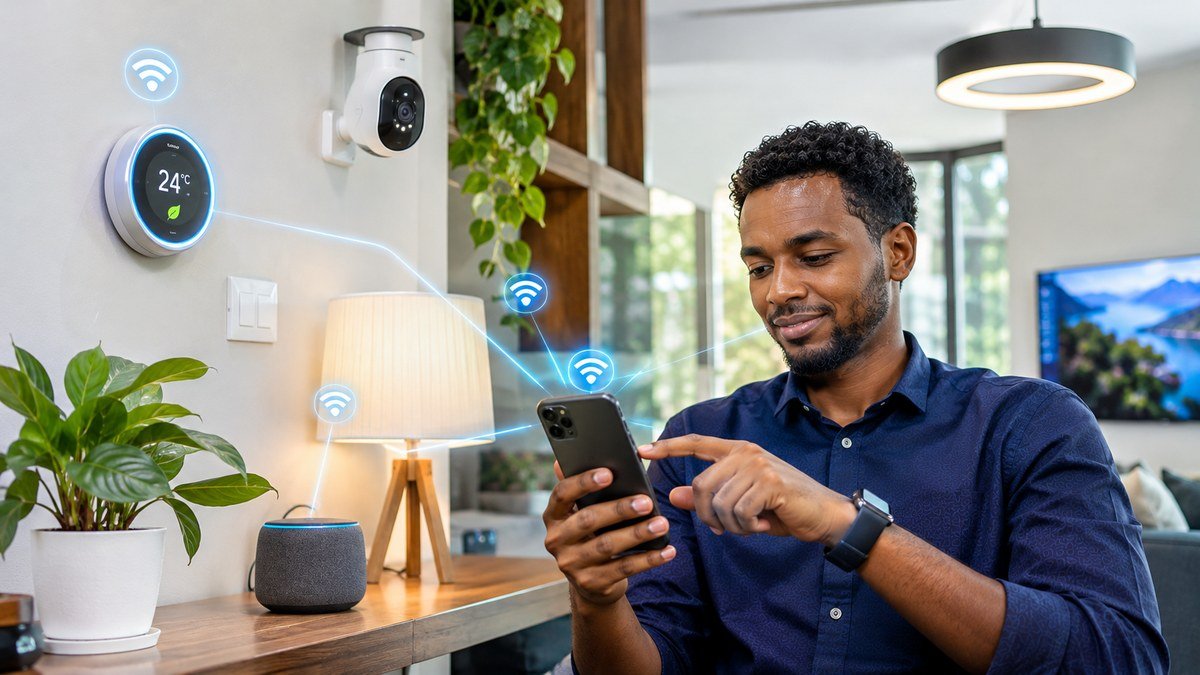
Technology is changing the way people live, work, communicate, and interact with the world. One of the most important developments behind this transformation is the Internet of Things (IoT).
The Internet of Things refers to a network of physical devices connected to the internet that collect, exchange, and sometimes act on data. These devices include smartphones, smart TVs, security cameras, wearable technology, connected vehicles, smart home appliances, and industrial sensors.
In 2026, IoT technology is becoming increasingly important in homes, businesses, healthcare, agriculture, transportation, and manufacturing.
Imagine controlling your home lights using a smartphone, monitoring your fitness through a smartwatch, or receiving information about your farm’s soil conditions through connected sensors. These are practical examples of how IoT makes everyday activities more connected and convenient.
However, IoT is not just about smart gadgets. It is also helping businesses improve operations, automate processes, monitor equipment, and make better decisions using real-time information.
In this guide, we explore the Internet of Things (IoT), how it works, its most important applications, benefits, challenges, and how smart devices are transforming our everyday lives in 2026.
1. What Is the Internet of Things (IoT)?

The Internet of Things (IoT) is a technology that connects physical objects to the internet, allowing them to collect, exchange, and sometimes respond to information.
These connected objects are commonly called smart devices because they use sensors, software, and communication technologies to perform specific tasks.
Unlike traditional devices that require people to operate every function manually, some IoT devices can perform activities automatically based on collected information or user instructions.
Examples of IoT devices include:
- Smart televisions.
- Smartwatches and fitness trackers.
- Connected security cameras.
- Smart refrigerators.
- Intelligent thermostats.
- Connected vehicles.
- Industrial monitoring sensors.
- Smart agricultural equipment.
- Medical monitoring devices.
- Smart lighting systems.
For example, a smart thermostat can monitor room temperature and adjust heating or cooling according to programmed settings.
Similarly, a connected security camera can send notifications to your smartphone when it detects movement.
According to the National Institute of Standards and Technology (NIST) and the OECD, IoT systems combine physical and digital components to support connected services and improve different processes.
NIST+2
2. How Does IoT Technology Work?

IoT technology works by connecting physical devices to networks so they can collect, transmit, and process information.
Although different IoT systems have different designs, most follow a similar process.
Here are the main stages:
- Data Collection: Sensors collect information such as temperature, movement, pressure, location, or humidity.
- Data Transmission: The device sends collected information through a communication network.
- Data Processing: Software or connected systems analyze the information locally or through cloud services.
- Decision Making: The system determines whether an action or notification is required.
- Action: The device performs an activity automatically or sends instructions to another connected device.
Example: How a smart home system works
Imagine you have a smart security camera installed outside your home.
- The camera detects movement.
- Its sensors collect information.
- The device sends an alert through your internet connection.
- The mobile application receives the notification.
- You open your smartphone to view the camera footage.
This process allows you to monitor your property without being physically present.
Main technologies behind IoT include:
- Sensors and actuators.
- Wi-Fi and Bluetooth.
- Cellular networks, including 4G and 5G.
- Cloud computing.
- Artificial intelligence.
- Data analytics.
- Edge computing.
Not every IoT device needs all these technologies. The exact combination depends on what the device is designed to do.
Microsoft Azure+2
3. 10 Ways IoT Is Transforming Our Lives in 2026
1. Smart Homes and Connected Living

Smart homes are among the most familiar examples of IoT technology.
Connected devices allow homeowners to control different household systems through smartphones, voice assistants, or automated settings.
Popular smart home applications include:
- Smart lighting systems.
- Intelligent temperature controls.
- Connected security cameras.
- Smart door locks.
- Automated appliances.
- Smart entertainment systems.
- Connected smoke and water leak detectors.
How it changes everyday life:
You can turn off lights remotely, monitor security cameras, adjust your home’s temperature, and receive alerts about certain household activities.
For example, smart lighting can automatically switch off when a room is unoccupied, depending on the system’s settings.
Practical benefit: Smart home technology can improve convenience, help manage energy use, and make household activities easier to control.
2. Healthcare and Medical Monitoring

IoT is creating new opportunities in healthcare by connecting medical devices, monitoring equipment, and digital healthcare platforms.
Connected medical devices can collect selected health information and transmit it to authorized applications or healthcare professionals.
Examples include:
- Smartwatches.
- Connected blood pressure monitors.
- Continuous glucose monitoring systems.
- Remote patient monitoring devices.
- Connected hospital equipment.
- Medical temperature sensors.
How it changes healthcare:
Healthcare providers can use connected systems to monitor certain patient measurements and review information remotely.
Patients may also use wearable devices to track activity and selected health measurements.
Practical benefit: IoT can support remote monitoring, improve access to certain healthcare services, and help medical professionals receive information more efficiently.
However, connected health devices should be used with appropriate medical guidance and data protection.
3. Smart Agriculture and Farming

Agriculture is an important area where IoT can help farmers monitor environmental conditions and manage resources.
Traditional farming often requires manual inspection of soil, crops, water supplies, and weather conditions.
IoT technology can make some of these activities easier through connected sensors and monitoring systems.
Examples of agricultural IoT applications include:
- Soil moisture sensors.
- Smart irrigation systems.
- Weather monitoring equipment.
- Connected greenhouse systems.
- Livestock tracking devices.
- Crop monitoring sensors.
- Agricultural machinery monitoring.
How it changes farming:
A farmer can install soil moisture sensors that collect information about water levels in the soil.
The information can be sent to a smartphone or agricultural management platform, helping the farmer decide when irrigation is necessary.
Practical benefit: IoT can support more efficient water management, better monitoring, and informed agricultural decisions.
For developing agricultural markets, affordable sensors and reliable connectivity are particularly important.
4. Smart Cities and Public Services

Smart cities use connected technologies to improve public infrastructure and urban services.
IoT allows different systems across a city to collect and exchange information.
Examples include:
- Smart traffic lights.
- Connected streetlights.
- Intelligent parking systems.
- Environmental monitoring sensors.
- Smart electricity meters.
- Waste management sensors.
- Public transportation tracking.
How it changes urban life:
City authorities can use information from connected devices to monitor traffic, manage public resources, and identify certain infrastructure problems.
For example, smart parking systems can help drivers identify available parking spaces without searching manually.
Practical benefit: Connected infrastructure can support better resource management, improve public services, and help cities make more informed decisions.
5. Transportation and Connected Vehicles

IoT is changing transportation by connecting vehicles, tracking systems, traffic infrastructure, and logistics platforms.
Connected technologies allow transportation companies to collect information about vehicle locations, performance, and operating conditions.
Important applications include:
- GPS vehicle tracking.
- Fleet management systems.
- Smart traffic monitoring.
- Vehicle performance monitoring.
- Connected public transportation.
- Delivery tracking.
- Predictive vehicle maintenance.
How it changes transportation:
A delivery company can use connected tracking devices to monitor vehicles and organize delivery routes.
Vehicle sensors can also provide information about engine performance and maintenance requirements.
Practical benefit: IoT can help transportation companies improve logistics, monitor vehicles, and manage operations more efficiently.
6. Manufacturing and Industrial Automation

Manufacturing companies are increasingly using IoT to connect industrial equipment and monitor production processes.
This approach is often called the Industrial Internet of Things (IIoT).
Connected machines can collect information about temperature, vibration, pressure, operating conditions, and equipment performance.
Industrial IoT applications include:
- Smart factory equipment.
- Connected industrial robots.
- Production monitoring.
- Predictive maintenance.
- Warehouse management.
- Equipment performance tracking.
- Automated quality monitoring.
How it changes manufacturing:
A factory can use connected sensors to monitor machines and identify unusual operating conditions.
This information may help maintenance teams detect potential problems before equipment fails.
Practical benefit: Industrial IoT can help reduce unnecessary downtime, improve operational visibility, and support more efficient production.
7. Retail and Smart Shopping

IoT is helping retailers improve how they manage products, inventory, stores, and customer experiences.
Connected devices can provide real-time information about stock levels, product movement, and equipment conditions.
Examples include:
- Smart inventory systems.
- Electronic shelf labels.
- Connected payment terminals.
- Smart vending machines.
- Product tracking sensors.
- Temperature monitoring for refrigerated goods.
- Automated warehouse systems.
How it changes shopping:
Retailers can use connected inventory systems to identify products that need restocking.
For example, a supermarket can monitor the temperature of refrigerated storage equipment and receive alerts when conditions move outside acceptable limits.
Practical benefit: IoT can improve inventory visibility, reduce certain operational problems, and support better customer service.
8. Education and Smart Learning Environments

IoT is also supporting the development of connected schools, universities, and learning environments.
Educational institutions can use connected devices to manage classrooms, monitor equipment, and improve campus operations.
Examples include:
- Smart classroom equipment.
- Connected attendance systems.
- Digital laboratory devices.
- Smart environmental controls.
- Connected security systems.
- Campus monitoring equipment.
How it changes education:
Connected classroom equipment can help teachers and administrators manage learning environments.
For example, environmental sensors can monitor classroom temperature and air quality, helping institutions identify when adjustments may be needed.
Practical benefit: IoT can support better learning environments, improve equipment management, and make certain educational activities more efficient.
9. Energy Management and Smart Grids

Energy management is another important application of IoT.
Connected electricity meters, sensors, and monitoring systems allow users and energy providers to collect information about energy consumption.
Examples include:
- Smart electricity meters.
- Connected solar energy systems.
- Smart power management.
- Energy monitoring applications.
- Connected building controls.
- Smart grid infrastructure.
How it changes energy management:
A connected electricity meter can provide information about energy consumption, allowing users to understand how much electricity they are using.
Businesses can also monitor energy consumption across different facilities.
Practical benefit: IoT can help identify energy usage patterns, improve monitoring, and support more efficient energy management.
10. Wearable Technology and Personal Convenience

Wearable technology is one of the most popular consumer applications of IoT.
Smartwatches, fitness trackers, and other connected accessories allow users to collect information about their activities and interact with digital services.
Common wearable devices include:
- Smartwatches.
- Fitness trackers.
- Smart glasses.
- Connected health accessories.
- GPS-enabled wearable devices.
- Activity monitoring bands.
How it changes everyday life:
Users can monitor daily activity, receive smartphone notifications, track workouts, and access selected health measurements.
Some wearable devices also support emergency notifications and location-sharing features.
Practical benefit: Wearable IoT devices can make personal information more accessible and help users understand their daily activity patterns.
4. Benefits of the Internet of Things (IoT)

IoT offers several advantages that can improve everyday activities and business operations.
Here are some of its most important benefits:
1. Greater Convenience
Connected devices allow people to control household appliances, security systems, and other equipment remotely.
2. Time Savings
Automation can reduce the need to perform repetitive tasks manually.
3. Improved Efficiency
Businesses can use connected sensors and monitoring systems to understand their operations and identify areas for improvement.
4. Better Decision-Making
IoT devices collect useful information that can help individuals and organizations make informed decisions.
5. Cost Management
Monitoring energy consumption, equipment performance, and resource usage can help identify opportunities to reduce operating costs.
6. Real-Time Monitoring
Users can receive information about connected devices and systems without being physically present.
7. Improved Resource Management
Agriculture, manufacturing, transportation, and energy companies can use IoT to monitor resources more effectively.
8. Better Customer Experiences
Businesses can use connected technologies to improve services, product availability, and customer interactions.
5. Challenges and Risks of IoT Technology

Although IoT offers many benefits, it also creates challenges that individuals and businesses should understand.
1. Cybersecurity Threats
Connected devices can become targets for hackers, malware, and unauthorized access, especially when they have weak security protections.
2. Privacy Concerns
Some smart devices collect personal information, location data, usage patterns, and other sensitive details.
If this information is not handled properly, it may expose users to privacy risks.
3. Internet Dependency
Many IoT devices depend on reliable internet connections. Poor connectivity can interrupt certain services and automated activities.
4. High Initial Costs
Purchasing connected equipment, installing sensors, and maintaining IoT systems can require significant investment.
5. Compatibility Problems
Devices from different manufacturers may use different communication standards and platforms, making integration difficult.
6. Data Management
Connected devices can generate large amounts of information. Businesses need suitable systems to store, process, and manage that data.
7. Device Maintenance
Smart devices require software updates, technical support, and regular maintenance to remain secure and functional.
Important advice: Before purchasing an IoT device, check its security features, privacy policy, update support, compatibility, and expected operating costs.
The NIST cybersecurity guidance updated in April 2026 emphasizes the importance of manufacturers providing appropriate security capabilities, maintenance information, and ongoing product support.
NIST Computer Security Resource Center+1
6. How to Protect Your Smart Devices from Cyberattacks

As more devices become connected to the internet, protecting them becomes increasingly important.
Here are ten practical ways to improve IoT security:
- Change Default Passwords: Replace factory passwords with strong, unique credentials.
- Update Device Software: Install security updates whenever manufacturers release them.
- Use Secure Wi-Fi: Protect your wireless network with modern encryption.
- Enable Multi-Factor Authentication: Use additional verification for supported accounts.
- Buy Trusted Devices: Choose products from manufacturers with clear security policies.
- Review Privacy Settings: Understand what information your devices collect.
- Disable Unnecessary Features: Turn off remote access and other functions you do not need.
- Use Network Separation: Where practical, connect smart devices to a separate network from important computers.
- Monitor Connected Devices: Check for unfamiliar devices or unusual activity.
- Replace Unsupported Products: Stop relying on devices that no longer receive essential security updates.
Pro tip: Your smart home security is only as strong as the protection applied to its connected devices, accounts, and network.
For additional guidance, see the NIST IoT Cybersecurity Guidance for Manufacturers.
7. The Future of the Internet of Things: IoT Trends to Watch in 2026 and Beyond

IoT continues to develop as it becomes more closely connected with artificial intelligence, cloud computing, 5G networks, and advanced data analytics.
Several developments are shaping its future.
1. AI-Powered IoT
Artificial intelligence can analyze information collected by connected devices and help identify patterns, detect unusual activity, and support automated decisions.
For example, an industrial monitoring system can use AI to identify signs that a machine may require maintenance.
2. Edge Computing
Edge computing processes certain information closer to where it is generated rather than sending everything to a distant cloud server.
This can reduce delays and support applications that require faster responses.
3. 5G and Connected Devices
5G networks can support large numbers of connected devices and provide improved connectivity for suitable IoT applications.
4. Smart Agriculture
Connected agricultural sensors and automated irrigation systems can help farmers monitor crops, soil conditions, and water consumption.
5. Industrial IoT
Factories are increasingly exploring connected machinery, equipment monitoring, and automated production systems.
6. Smarter Healthcare Devices
Connected medical equipment and wearable devices are creating opportunities for remote monitoring and digital healthcare services.
7. Improved IoT Security
Device manufacturers are placing greater emphasis on security during product development, software maintenance, and the entire device lifecycle.
These developments suggest that the next stage of IoT will involve more intelligent devices, better data processing, and stronger attention to cybersecurity.
311 Institute+3
8. How Small Businesses Can Benefit from IoT Technology

IoT is not only useful for large technology companies. Small businesses can also use connected devices to improve everyday operations.
Here are some practical examples:
| Business Type | IoT Application |
|---|---|
| Retail Stores | Smart inventory monitoring |
| Restaurants | Refrigeration temperature monitoring |
| Farms | Soil and irrigation sensors |
| Warehouses | Connected inventory tracking |
| Transport Companies | Vehicle GPS tracking |
| Offices | Smart lighting and energy controls |
| Manufacturing | Equipment performance monitoring |
How to get started:
- Identify a business problem that connected technology could solve.
- Research affordable IoT devices.
- Compare manufacturers and security features.
- Calculate installation and maintenance costs.
- Test the technology on a small scale.
- Measure the results before expanding.
For entrepreneurs, the best approach is to start with a specific business need rather than purchasing expensive technology without a clear purpose.
Frequently Asked Questions (FAQs)
1. What is the Internet of Things (IoT)?
The Internet of Things is a network of physical devices connected to the internet that collect, exchange, and process information. Examples include smart TVs, security cameras, wearable devices, and connected vehicles.
2. How does IoT work?
IoT devices use sensors, software, and network connections to collect information, communicate with other systems, and perform certain tasks automatically.
3. What are examples of IoT devices?
Common examples include smartwatches, smart refrigerators, connected security cameras, smart thermostats, fitness trackers, smart speakers, and industrial sensors.
4. How does IoT improve everyday life?
IoT can make everyday activities more convenient through smart home automation, remote monitoring, wearable technology, connected transportation, and intelligent appliances.
5. What are the benefits of IoT?
Its main benefits include automation, improved efficiency, real-time monitoring, better resource management, time savings, and more informed decision-making.
6. What are the disadvantages of IoT?
Common disadvantages include cybersecurity threats, privacy concerns, internet dependency, compatibility problems, maintenance requirements, and installation costs.
7. How is IoT used in business?
Businesses use IoT for inventory management, equipment monitoring, transportation tracking, energy management, industrial automation, and customer services.
8. Is IoT technology safe?
IoT can be used safely when devices have appropriate security protections. Users should update software, change default passwords, secure networks, and review privacy settings.
9. What is the difference between IoT and AI?
IoT connects physical devices and allows them to exchange information. Artificial intelligence analyzes information and can support predictions, recommendations, and automated decisions. The two technologies can work together.
10. What is the future of IoT in 2026?
The future of IoT includes greater integration with artificial intelligence, edge computing, 5G networks, smart agriculture, connected healthcare, and industrial automation.
Conclusion: IoT Is Making the World Smarter and More Connected
The Internet of Things is changing how people interact with technology and the physical world.
From smart homes and wearable devices to connected factories, healthcare systems, and intelligent agriculture, IoT is creating new opportunities to improve convenience, efficiency, and productivity.
As we move further into 2026, the combination of IoT, artificial intelligence, 5G, and cloud computing is expected to support even more advanced connected services.
However, security, privacy, affordability, and reliable internet access remain important challenges.
For individuals, understanding IoT can help them make better decisions when choosing smart devices.
For entrepreneurs and businesses, IoT offers opportunities to improve operations, manage resources, and develop innovative digital services.